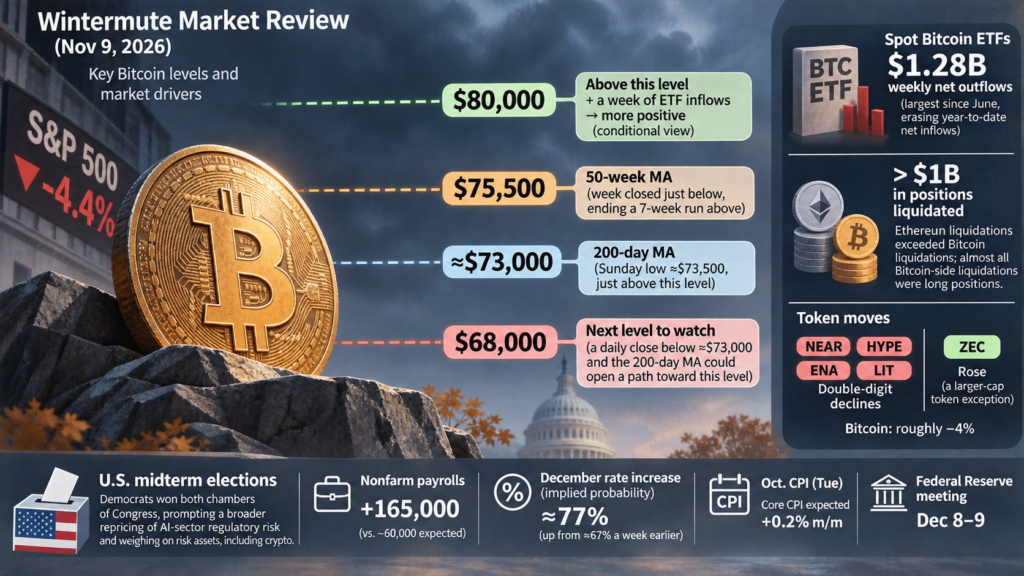
In a market review reported on November 9, 2026, Wintermute said Bitcoin had closed the week just below its 50-week moving average of $75,500, ending a seven-week run above that level. The firm remained cautious while Bitcoin traded below the average and identified $68,000 as its next level to watch.
Market pressure and liquidations
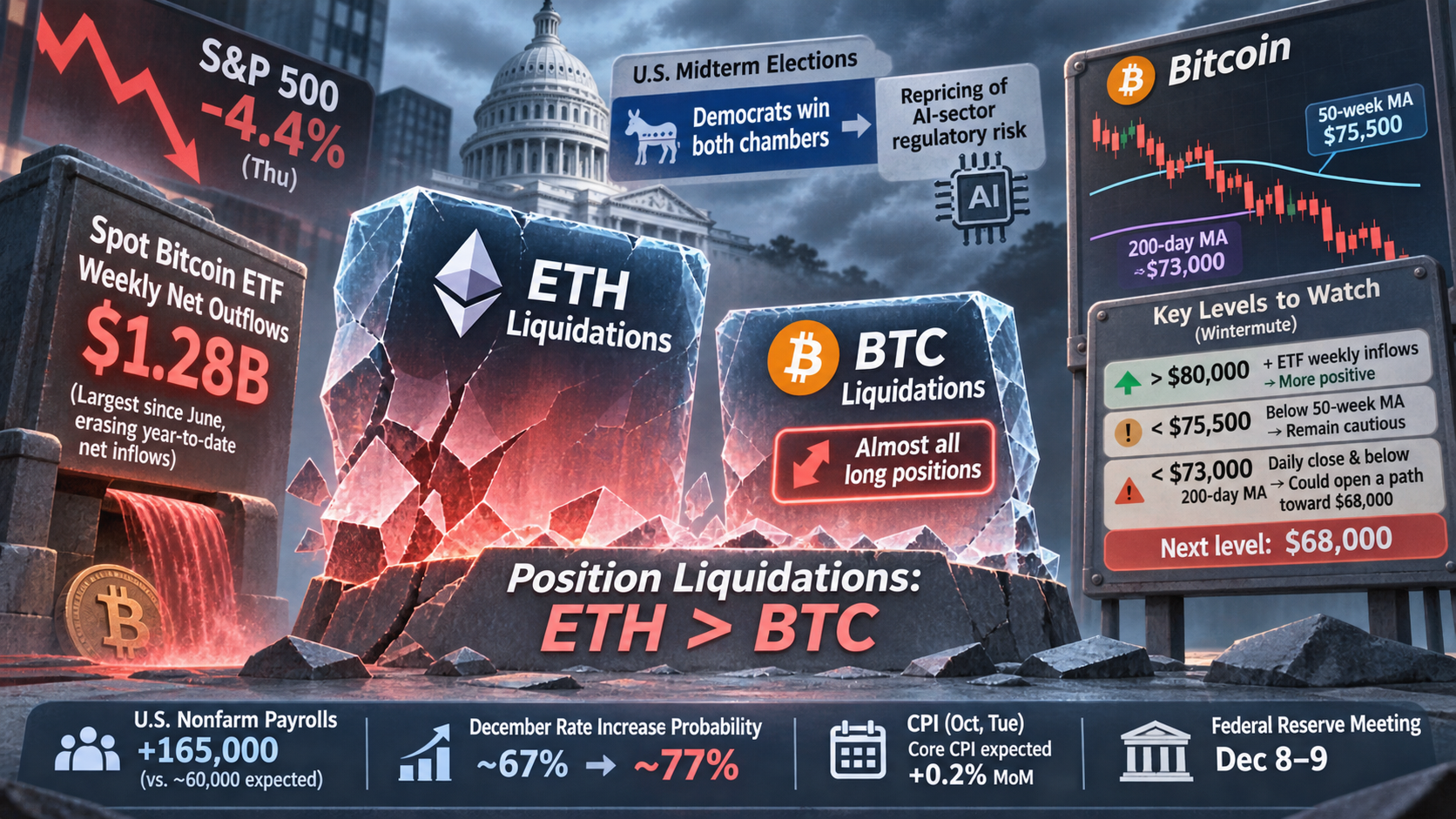
Wintermute said the S&P 500 fell 4.4% on Thursday, its largest one-day decline since April 2025. It attributed the broader repricing of AI-sector regulatory risk to Democrats winning both chambers of Congress in the U.S. midterm elections. Crypto weakened alongside other risk assets, with Bitcoin falling below $75,000. According to Wintermute, spot Bitcoin ETFs recorded $1.28 billion in weekly net outflows—the largest since June—enough to erase their net inflows for the year.
Bitcoin had briefly reached $81,000 on Wednesday but surrendered those gains by Friday, Wintermute said. It touched roughly $73,500 on Sunday, just above its approximately $73,000 200-day moving average. By Monday, more than $1 billion in positions had been liquidated. Ethereum liquidations exceeded Bitcoin liquidations, while almost all Bitcoin-side liquidations were long positions. NEAR, HYPE, ENA and LIT posted double-digit declines, compared with a roughly 4% fall in Bitcoin; ZEC was among the few larger-cap tokens to rise.
What Wintermute is watching
Wintermute said a daily Bitcoin close below $73,000 and the 200-day moving average could open a path toward $68,000. It would turn more positive if Bitcoin held above $80,000 on a daily basis and spot Bitcoin ETFs recorded a week of net inflows. These are the firm’s conditional market views, not outcomes.
Friday’s reported U.S. nonfarm payroll gain was 165,000, above market expectations of roughly 60,000. Wintermute said the implied probability of a December rate increase had risen from about 67% a week earlier to about 77%. It identified Tuesday’s October CPI release—when core CPI was expected to rise 0.2% month over month—as the next test, ahead of the Federal Reserve’s December 8–9 meeting.