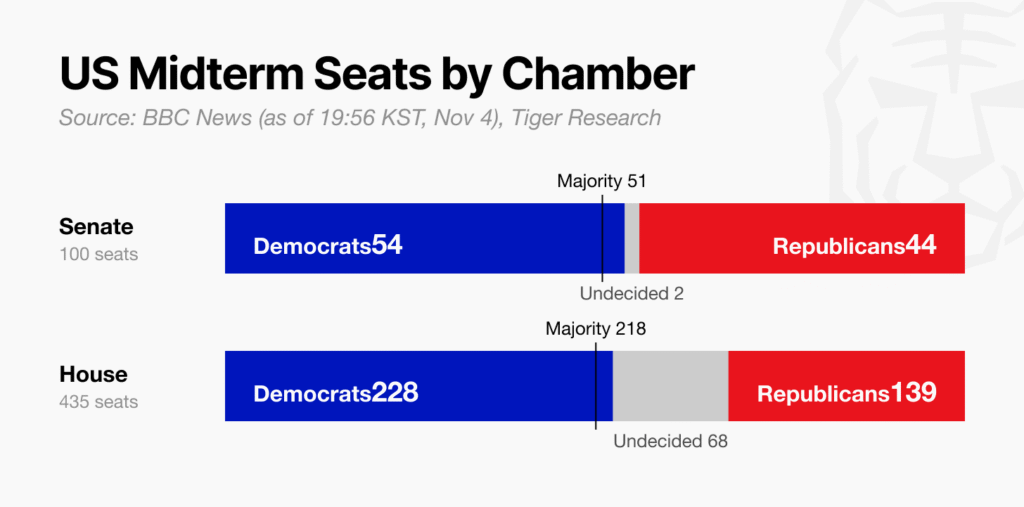
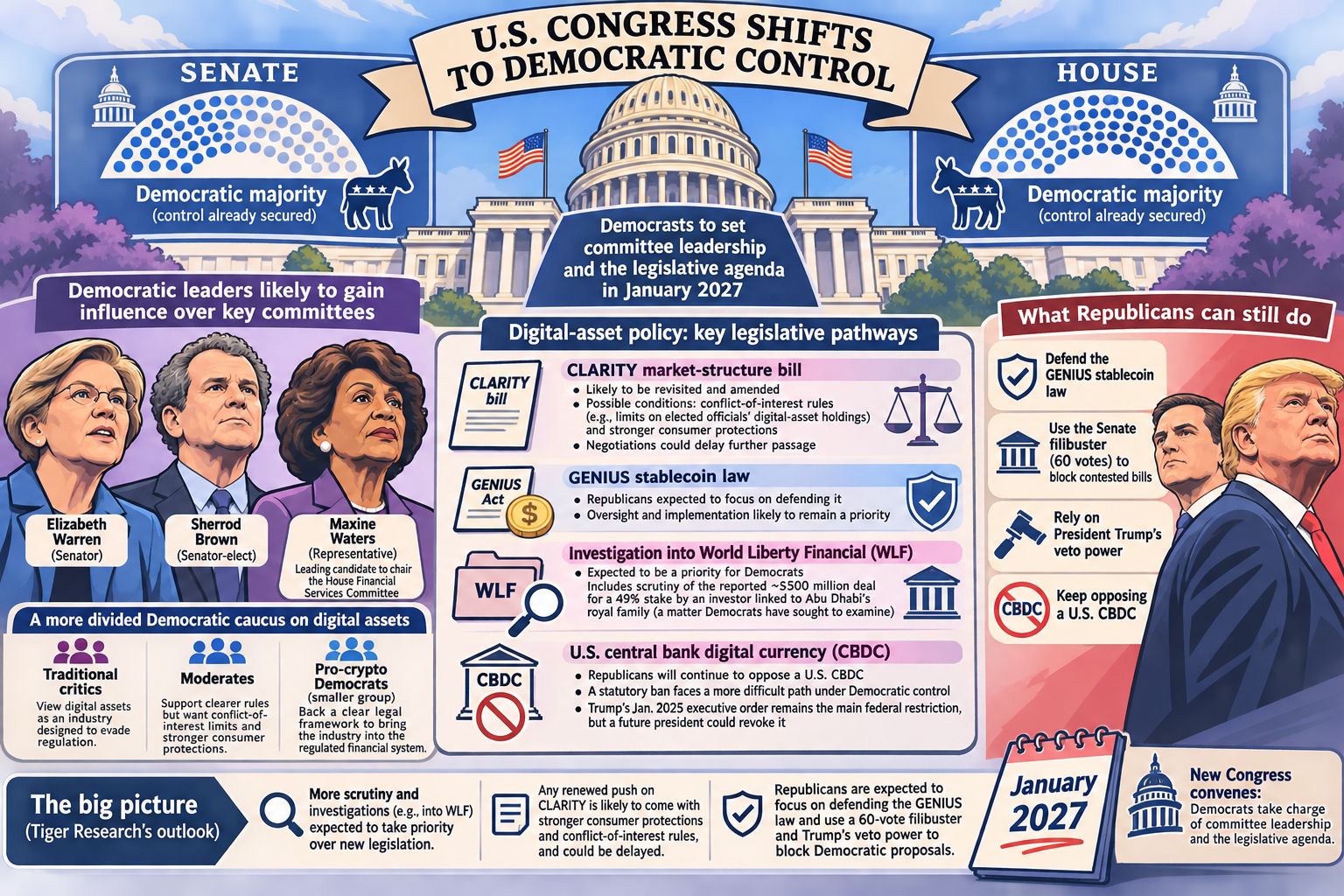
In an analysis published on November 5, 2026, Tiger Research said Democrats had secured majorities in both chambers of Congress: 54 of 100 Senate seats and 228 of 435 House seats. Two Senate races and 68 House races were still undecided, but those results could not change which party would control either chamber. Democrats are set to take charge of committee leadership and the legislative agenda when the new Congress convenes in January 2027.
For digital-asset policy, Tiger Research expects that shift to make further legislation harder to pass. It says Democrats are likely to revisit the Republican-led framework, while investigations into the Trump family’s digital-asset business, World Liberty Financial (WLF), could take priority. These are forecasts about the next Congress, not actions it has already taken.
Committees and the CLARITY bill
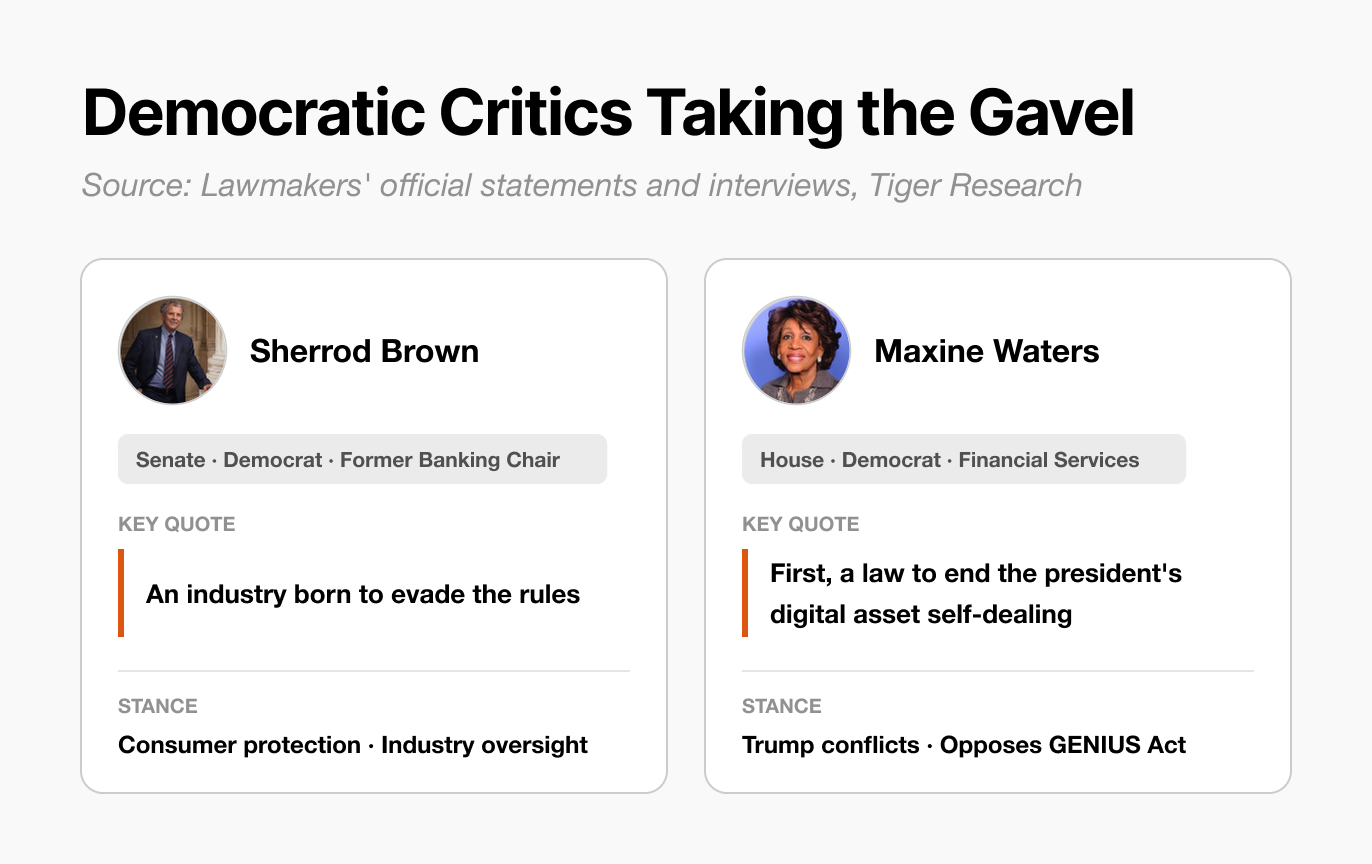
Tiger Research identifies Elizabeth Warren, senator-elect Sherrod Brown and Representative Maxine Waters as prominent industry critics likely to gain influence over relevant committees. Waters, currently the senior Democrat on the House Financial Services Committee, is described as a leading candidate to chair it. Committee leadership would affect which proposals receive hearings and advance.
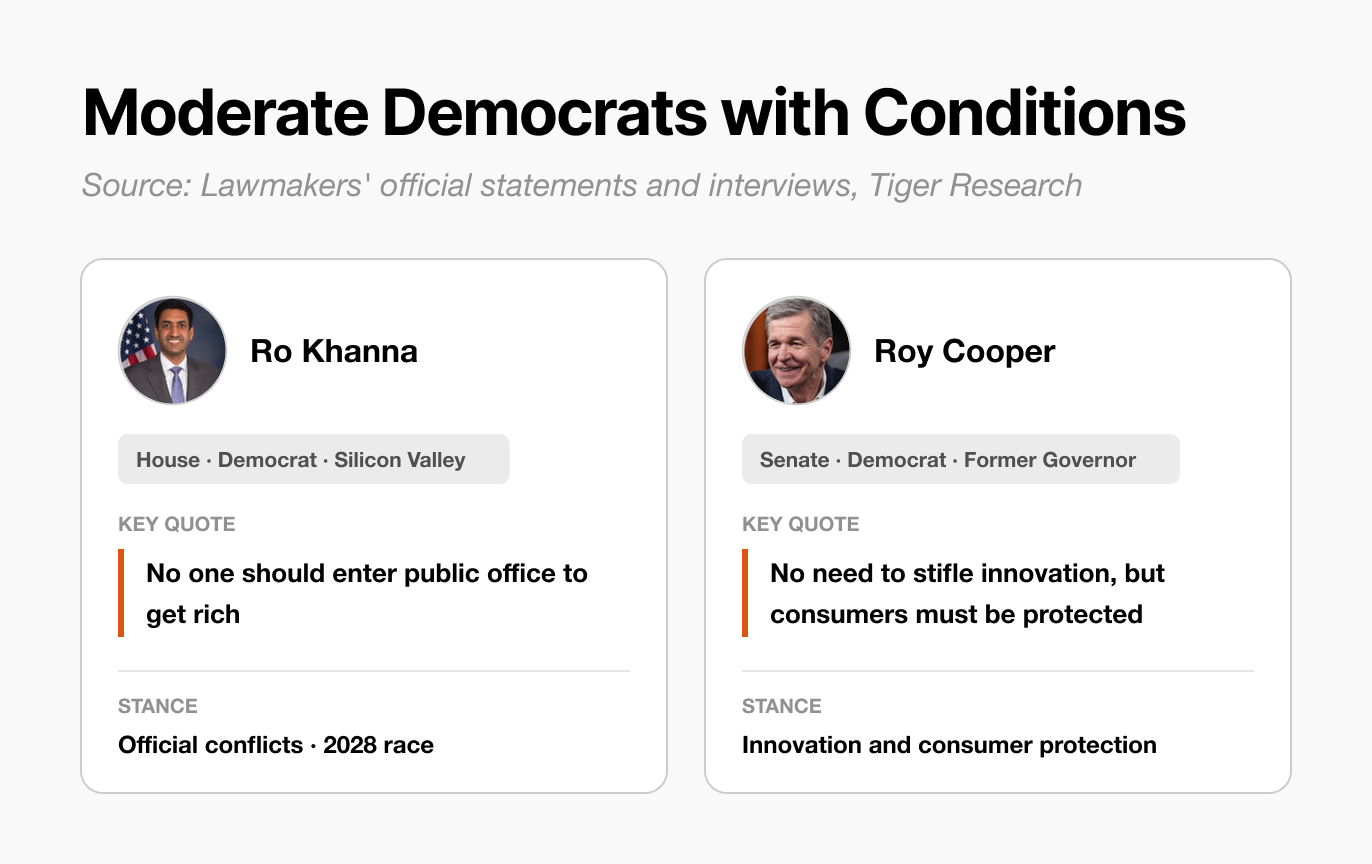
The analysis says even Democrats who favor clearer digital-asset rules may seek changes to the CLARITY market-structure bill. Representative Ro Khanna supports legislation establishing clearer rules but has also called for restrictions on elected officials’ digital-asset holdings. Tiger Research says lawmakers may demand conflict-of-interest provisions and stronger consumer protections before supporting a revised bill. Negotiating those changes could delay it further; the analysis does not describe them as enacted requirements.
Tiger Research also points to Democrats’ calls for scrutiny of WLF. It cites a prior report that an investor linked to Abu Dhabi’s royal family bought a 49% stake in WLF for approximately $500 million four days before Trump’s inauguration. That reported transaction is among the matters Democrats have sought to examine, rather than a finding presented as established by a congressional investigation.
What Republicans can still do
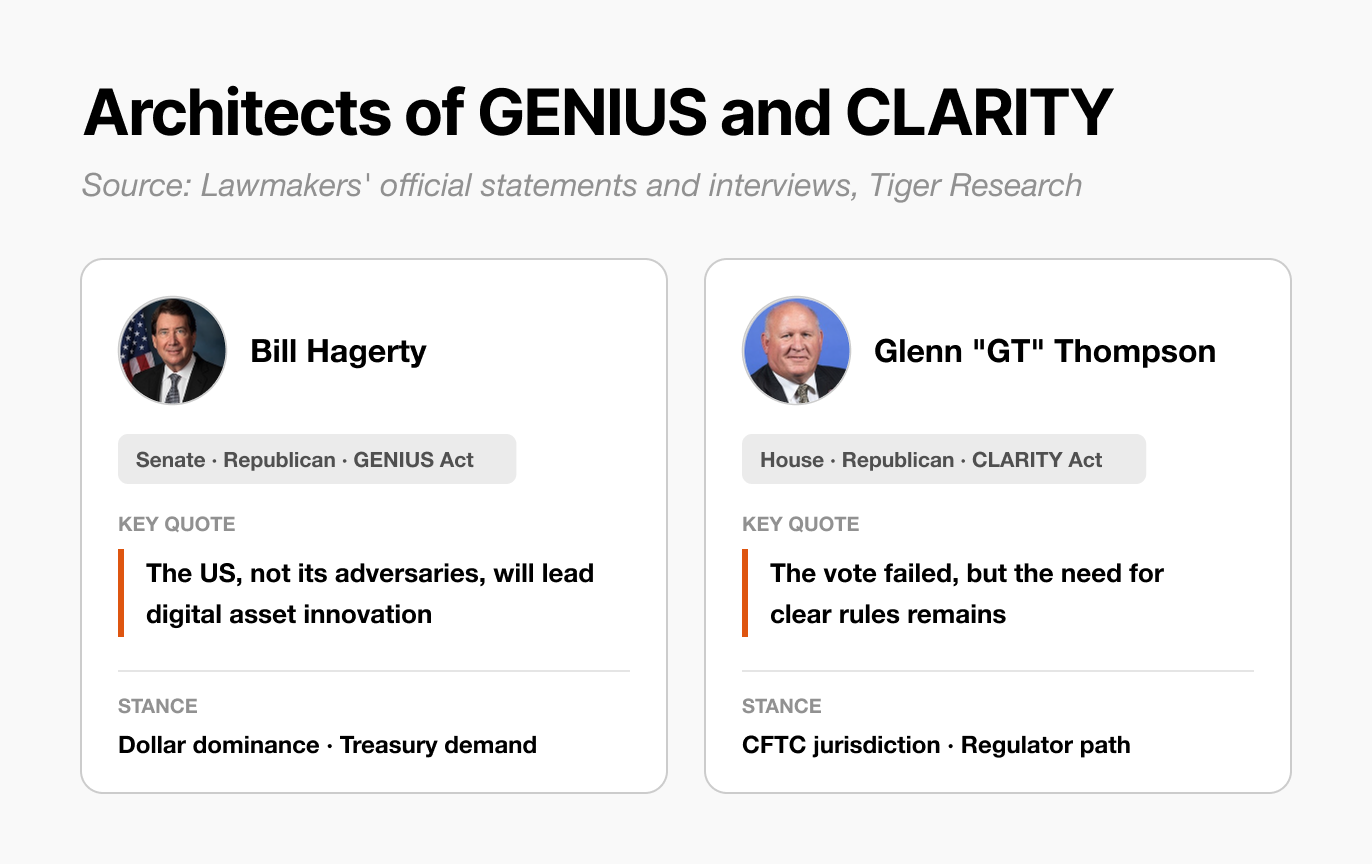
Tiger Research expects Republicans to focus on defending the existing GENIUS stablecoin law rather than passing another major digital-asset bill. Although they will be in the minority, the analysis notes that most contested Senate legislation needs 60 votes to overcome a filibuster, and President Trump could veto legislation sent to him.
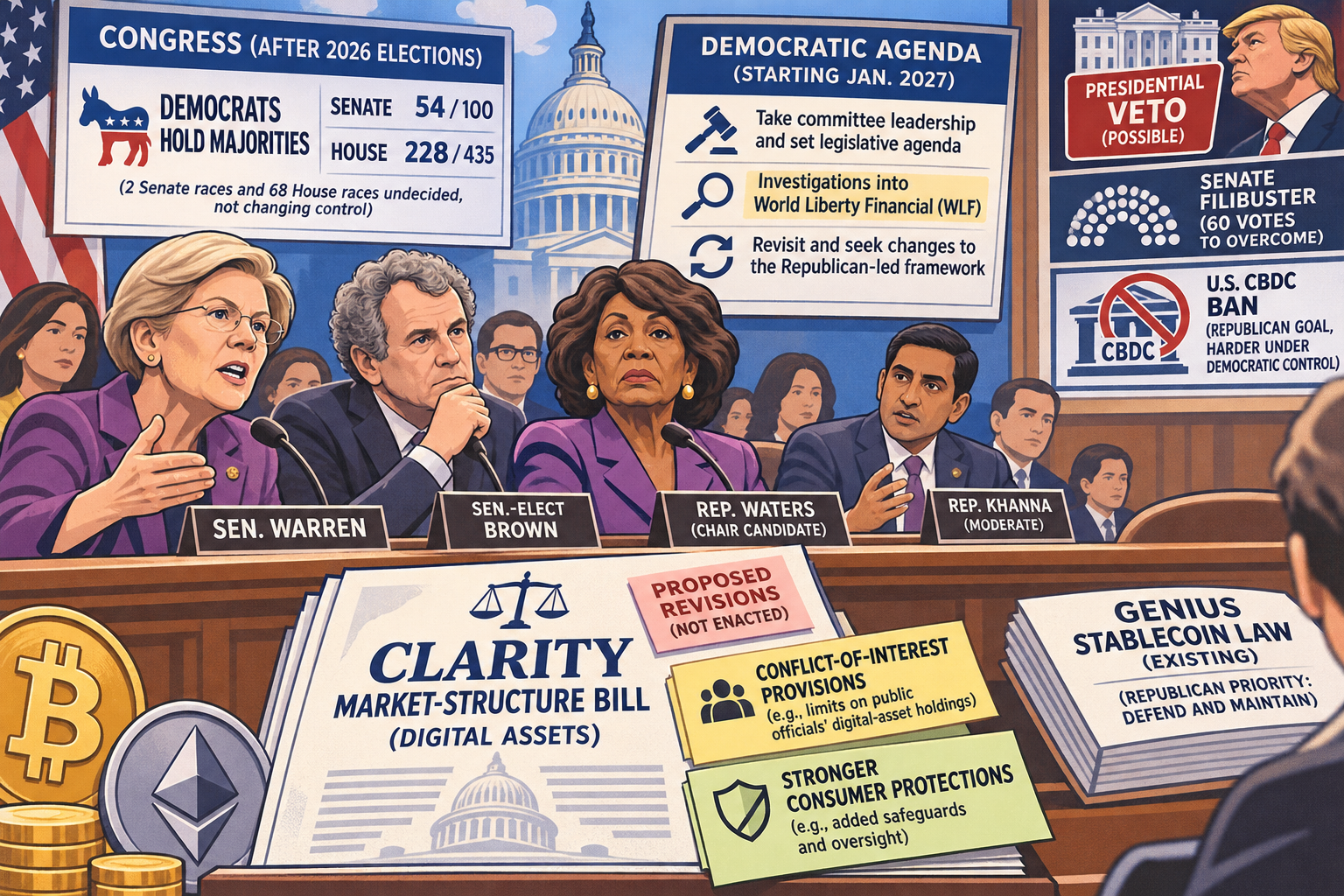
Republicans’ opposition to a U.S. central bank digital currency is also likely to continue. Their proposed statutory ban faces a more difficult path under Democratic control. Tiger Research says Trump’s January 2025 executive order remains the principal federal restriction, but a future president could revoke it.
These developments concern the wider digital-asset regulatory environment, including rules for stablecoins and markets used by ETH holders. Tiger Research does not identify a change to Ethereum’s protocol, validator duties or staking rules.