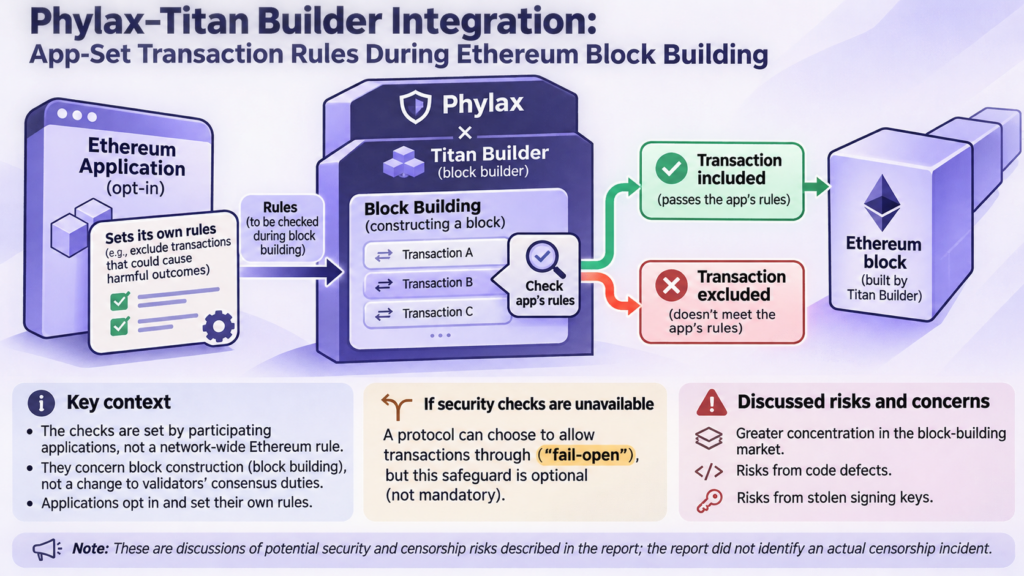
As reported on November 19, 2026, Phylax’s integration with block builder Titan Builder lets Ethereum applications set rules to exclude transactions that could cause harmful outcomes during block building. Phylax told Cointelegraph that Titan currently produces about half of Ethereum’s blocks.
The checks are set by participating applications, not presented as a network-wide Ethereum rule. They also concern block construction rather than a change to validators’ consensus duties.
Digital-asset lawyer Gabriel Shapiro warned that if builders providing the required security proofs stop operating, affected contracts could continue rejecting transactions. Phylax CEO Odysseas Lamtzidis said a protocol can instead allow transactions through when security checks are unavailable, but that “fail-open” safeguard is optional.
The report also described researchers’ concerns about greater concentration in the block-building market and risks from code defects or stolen signing keys. Phylax said applications opt in and set their own rules. These are discussions of potential security and censorship risks; the report did not identify an actual censorship incident.